
Porcelain vs
Indian Sandstone.
Picking between porcelain and Indian sandstone? Here's the straight talk we give our customers before they decide.
Porcelain is the easy, fit-and-forget option. Indian sandstone costs less and brings a warmer, more natural feel. Both age well when laid properly, so the call really comes down to your budget, the look you want, and how much upkeep you'll actually do.
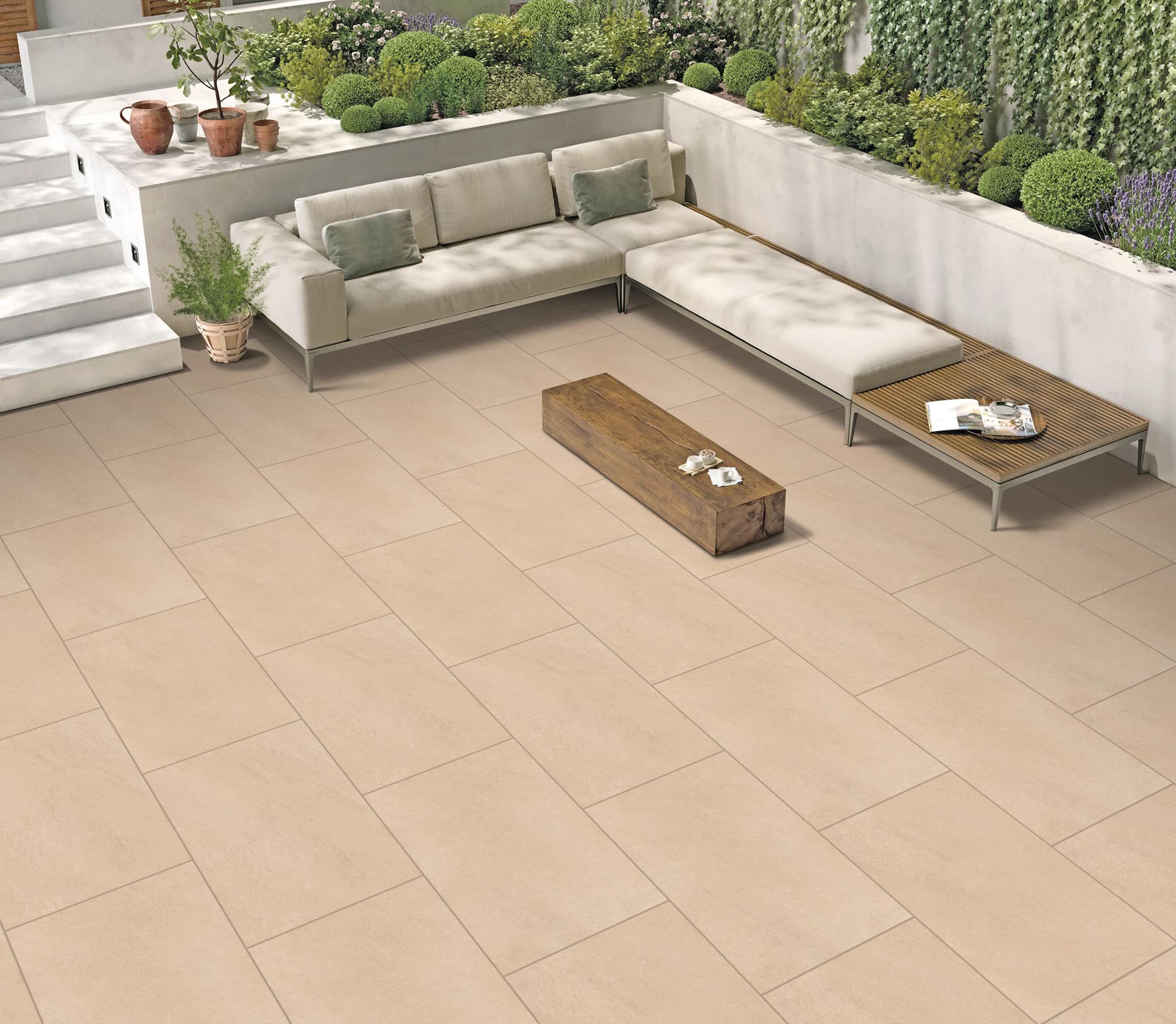
Uniform, frost-proof, virtually maintenance-free. The contemporary spec.
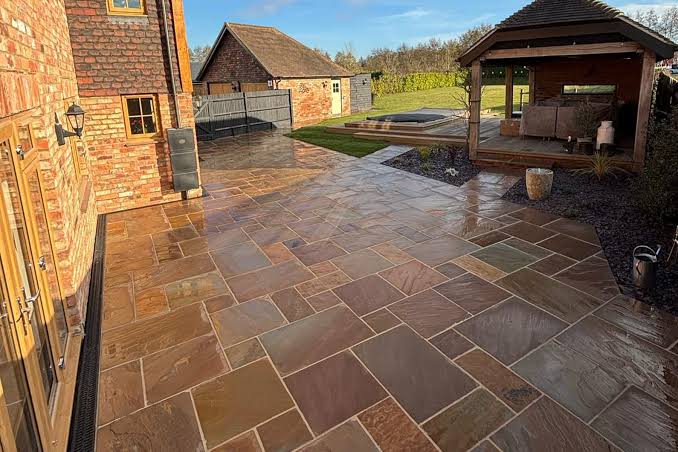
Natural variation, warm tones, weathers with character. The classic.
How they stack up.
| Factor | Porcelain | Indian Sandstone |
|---|---|---|
| Cost per m² | Higher | Lower |
| Maintenance | Very low | Moderate, needs sealing |
| Frost resistance | Excellent | Good |
| Stain resistance | Excellent | Lower, porous surface |
| Slip rating | R11 typical | Naturally textured |
| Look | Uniform, contemporary | Natural, varied tones |
| Cutting on site | Wet diamond blade | Easier to cut |
| Lifespan | Very long, fade resistant | Very long, weathers naturally |
Cost
Indian sandstone wins on sticker price. It's the go-to for larger residential patios and trade jobs where budget rules. Porcelain costs more upfront, but the lifetime gap closes once you factor in sealing, jet washing, and the odd replacement slab on sandstone.
Look and feel
Porcelain reads clean and consistent. The tones stay uniform across the pack and the surface holds the colour it was laid in. Indian sandstone has real character: fossil veining, natural colour shifts, a warmer feel underfoot. Neither is better, they're just different aesthetic decisions.
Durability and weather
Both shrug off the UK climate. Porcelain is non-porous, frost-proof, and UV stable. Indian sandstone is also frost-resistant and hard wearing, but its porosity means algae and lichen can build up on shaded or north-facing installs without treatment.
Maintenance
This is where porcelain pulls clearly ahead. A rinse with water usually does it. No sealing, no annual treatment, no panic over spilled wine. Sandstone wants sealing after installation, a re-seal every few years, and the occasional jet wash.
Installation
Sandstone is forgiving on site, easier to cut and easier to shape. Porcelain is harder, so cuts need a wet diamond blade and a slower pace. Porcelain is typically 20mm and sandstone calibrated to 22mm, so the bedding mix has to suit the substrate. Both lay on a full mortar bed with a primer slurry.
So which should you choose?
You want a contemporary look, a clean uniform finish, and a fit-and-forget surface. Suits modern builds, shaded gardens, and clients who don't want to think about upkeep.
Budget matters, or the project calls for a warmer, more traditional look that weathers gracefully. Suits period properties, country gardens, and larger areas where the cost saving compounds.
We hold UK stock of both.
Browse the full ranges, or send us your requirement and we'll come back with availability and a quote.